
How Industrial Filtration Improves Water Quality, Equipment Reliability, and Operational Efficiency
Quick Overview
Industrial water treatment systems rely on multiple stages of filtration to remove suspended solids, reduce particulate contamination, and protect critical downstream equipment. Proper filtration improves water quality, minimizes membrane fouling, extends the service life of filtration components, and helps maintain stable system performance. Whether used in municipal treatment plants, industrial process water systems, or ultrapure water production, an effective filtration strategy plays a vital role in operational reliability, maintenance efficiency, and long-term cost control.
1. Industry Background
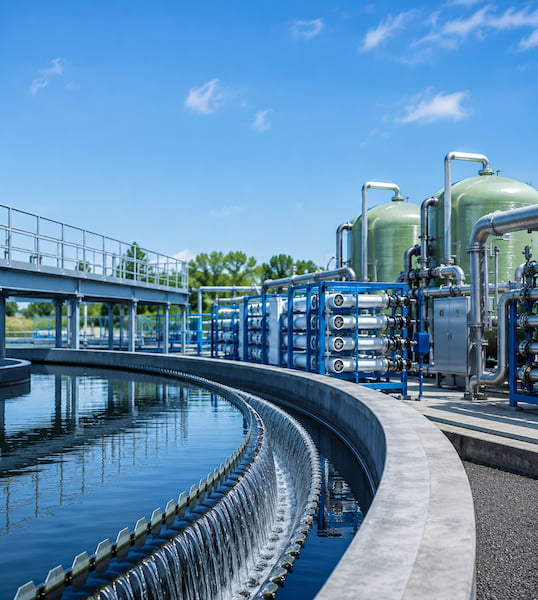
Water treatment is one of the most important industrial processes supporting manufacturing, municipal infrastructure, utilities, and commercial facilities. Depending on the application, raw water may originate from rivers, lakes, reservoirs, groundwater, recycled water, or municipal water supplies. Before it can be safely used in industrial production or distributed for public consumption, water must pass through multiple treatment stages designed to remove physical, chemical, and biological contaminants.
Industrial filtration serves as the foundation of these treatment processes. Filtration systems remove suspended solids, sediments, rust particles, organic matter, colloids, and other contaminants that could negatively affect downstream equipment or compromise water quality. Effective filtration also protects advanced treatment technologies such as ultrafiltration (UF), nanofiltration (NF), reverse osmosis (RO), ion exchange systems, ultraviolet sterilization, and chemical dosing equipment.
As water quality requirements continue to increase across industries such as semiconductor manufacturing, pharmaceutical production, food & beverage processing, power generation, and ultrapure water systems, filtration has become an essential component of modern water treatment facilities. Selecting the appropriate filtration solution not only improves process stability but also helps reduce maintenance costs, minimize equipment downtime, and extend the operational life of critical assets.
2. Customer Challenge
Although every water treatment facility has unique operating conditions, many systems encounter similar filtration challenges throughout daily operation.
Common issues include:
- High concentrations of suspended solids in raw water
- Sediment accumulation inside pipelines and process equipment
- Frequent clogging of cartridge filters
- Premature fouling of UF and RO membranes
- Increased differential pressure across filtration systems
- Shortened filter replacement intervals
- Rising maintenance requirements
- Unexpected production interruptions caused by filtration failures
- Declining water quality during seasonal changes
- Increased operating costs due to inefficient filtration
Without an effective multi-stage filtration strategy, contaminants can progressively damage downstream equipment, reduce treatment efficiency, and increase the overall cost of plant operation.
3. Recommended Filtration Solution
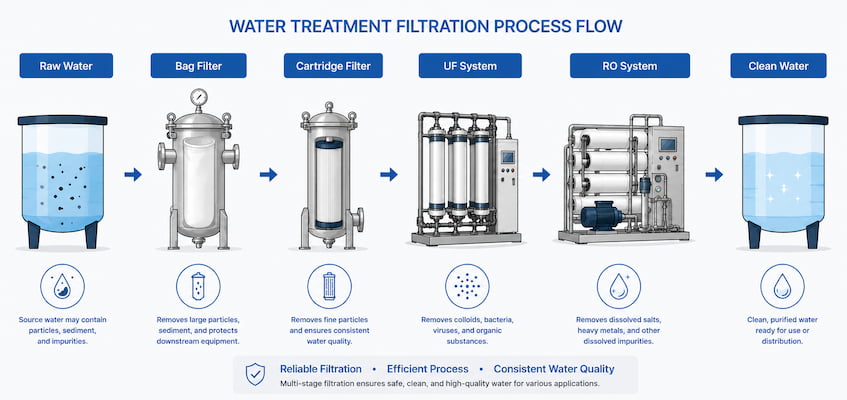
Typical Industrial Water Treatment Process
Each stage of filtration performs a specific function to improve water quality and protect downstream systems.
Bag Filter
Bag filters provide coarse filtration by removing large suspended solids, sand, rust particles, and debris. They reduce the contaminant load entering downstream filtration equipment and significantly extend the service life of finer filters.
Cartridge Filter
Cartridge filters perform intermediate filtration by removing smaller particles that remain after the bag filtration stage. They help maintain stable water quality while protecting membrane systems from excessive particulate loading.
Ultrafiltration (UF)
UF membranes remove fine suspended solids, colloidal particles, bacteria, and larger microorganisms. This stage provides an effective barrier before reverse osmosis and improves overall system efficiency.
Reverse Osmosis (RO)
RO membranes remove dissolved salts, ions, and microscopic contaminants to produce high-quality purified water suitable for demanding industrial applications.
Storage Tank
Treated water is stored before being supplied to production processes, ensuring consistent flow and stable water quality throughout the system.
4. Products Used
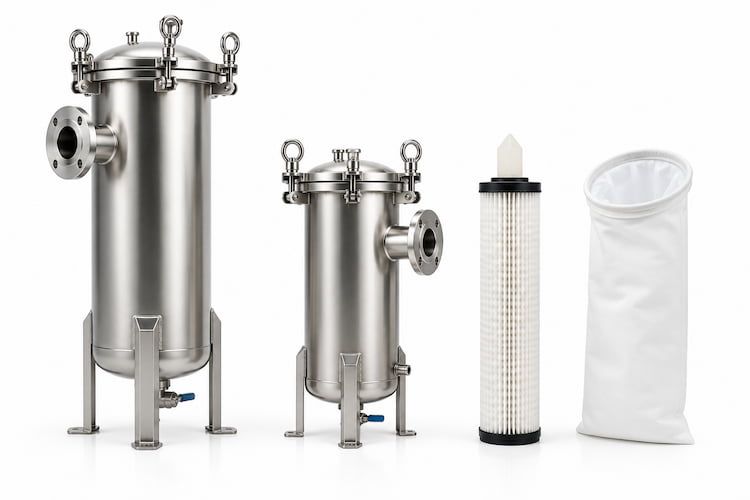
Typical filtration products used in industrial water treatment systems include:
| Product | Primary Function |
| Filter Bags | Coarse particle removal |
| Filter Cartridges | Fine particle filtration |
| Bag Filter Housings | Support bag filtration systems |
| Cartridge Filter Housings | Support cartridge filtration systems |
| UF Membranes | Remove microorganisms and colloids |
| RO Membranes | Produce purified water |
| Ion Exchange Resins | Water softening and deionization |
| FRP Pressure Vessels | Membrane pressure vessel housing |
5. Results & Benefits
A properly designed multi-stage filtration system can provide numerous operational advantages throughout the water treatment process.
Typical benefits include:
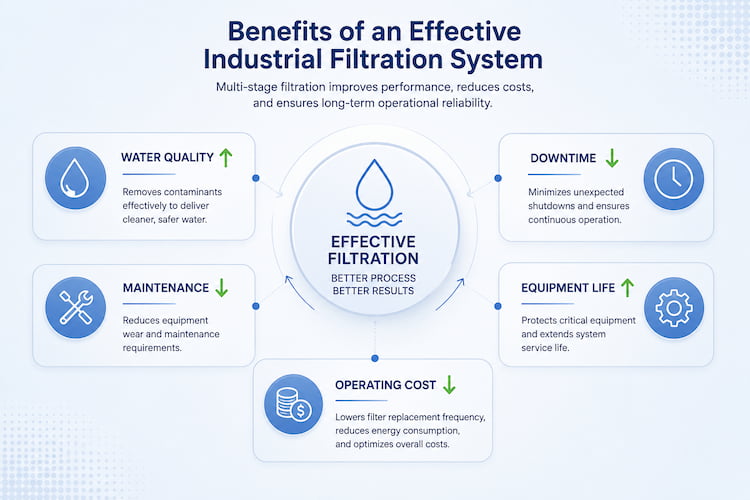
- ✔ Improved raw water quality
- ✔ Better protection for UF and RO membranes
- ✔ Longer filter service life
- ✔ Reduced membrane fouling
- ✔ Stable operating pressure
- ✔ Lower maintenance requirements
- ✔ Reduced operating costs
- ✔ Increased system reliability
- ✔ Improved production stability
- ✔ Longer equipment lifespan
The combination of coarse filtration, fine filtration, membrane separation, and water treatment components helps create a reliable and efficient water purification process suitable for a wide range of industrial applications.
6. Related Industries
Many industries use similar multi-stage filtration technologies for water purification and process protection.
Related industries include:
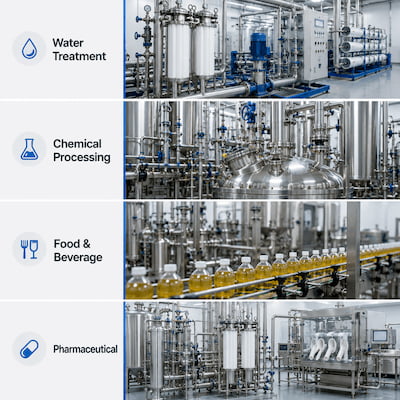
- Water Treatment
- Food & Beverage Processing
- Pharmaceutical Manufacturing
- Semiconductor Manufacturing
- Electronics Production
- Power Generation
- Chemical Processing
- Battery Manufacturing
Although water quality requirements vary among industries, the fundamental principles of industrial filtration remain highly consistent.
7. Frequently Asked Questions
Why are bag filters installed before cartridge filters?
Bag filters remove larger particles first, reducing the contaminant load on cartridge filters and extending their service life.
Why is cartridge filtration important before UF or RO membranes?
Cartridge filters remove fine suspended particles that could otherwise foul membrane surfaces and reduce system efficiency.
Why must RO membranes be protected?
RO membranes are expensive and sensitive to particulate contamination. Effective pre-filtration helps maintain performance and extends membrane lifespan.
How often should industrial filters be replaced?
Replacement intervals depend on water quality, contaminant concentration, operating pressure, and system design. Monitoring differential pressure is a common method for determining replacement timing.
Can one filtration stage replace the entire treatment process?
No. Industrial water treatment typically requires multiple filtration stages because each technology removes different types and sizes of contaminants.
What industries benefit most from multi-stage filtration?
Industries requiring high water quality—including semiconductor manufacturing, pharmaceuticals, food processing, power generation, and ultrapure water production—commonly rely on multi-stage filtration systems.
Related Products
- Filter Bags
- Filter Cartridges
- Bag Filter Housings
- Cartridge Filter Housings
- UF Membranes
- RO Membranes
- Ion Exchange Resins
- FRP Pressure Vessels
Related Knowledge Articles
- What Is Industrial Filtration?
- What Is Liquid Filtration in Industrial Systems?
- What Is Membrane Filtration Technology?
- What Is Water Treatment Filtration System?
- What Is Reverse Osmosis (RO)?
- What Is Ultrafiltration (UF)?
- What Is Micron Rating in Filtration?
- How to Select the Right Industrial Filter Cartridge?
Related Case Studies
· Food & Beverage Filtration Case Study
· Semiconductor Filtration Case Study
· Pharmaceutical Filtration Case Study
· Chemical Processing Filtration Case Study
· Battery Manufacturing Filtration Case Study
· Ultra Pure Water (UPW) Filtration Case Study
Need a Filtration Solution?
Whether you’re planning a new filtration system, upgrading an existing process, or sourcing compatible replacement filters, KROENT provides industrial filtration solutions tailored to your application requirements.
Request a Solution